
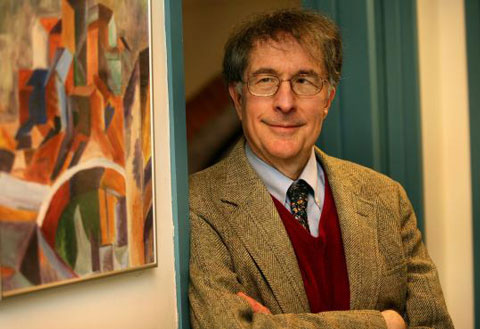
Howard Gardner is a distinguished scholar holding the position of John H. and Elisabeth A. Hobbs Professor of Cognition and Education. He also serves as an adjunct professor of psychology at Harvard University and is the senior director of Harvard Project Zero. His contributions have earned him numerous accolades, including a MacArthur Prize Fellowship in 1981 and honorary degrees from 26 institutions. In both 2005 and 2008, Foreign Policy and Prospect magazines recognized him as one of the world’s 100 most influential public intellectuals.
Gardner has authored 25 books—translated into 28 languages—and hundreds of articles. He is most celebrated for his Theory of Multiple Intelligences, which challenges the traditional view that human intelligence is a single, general ability measurable by standard IQ tests.
Understanding Multiple Intelligences
Proposed in 1983, Gardner’s theory suggests that intelligence is differentiated into specific modalities rather than being dominated by a single “g-factor.” Gardner argues that people possess a wide range of cognitive abilities that show only weak correlations with one another.
For instance, a child who struggles with quick multiplication might not be “less intelligent” than a peer who memorizes tables instantly. Instead, that child might:
-
Require a different pedagogical approach to the subject.
-
Excel in a non-mathematical field.
-
Be processing the concept of multiplication at a fundamentally deeper, more complex level.
The Nine Intelligences
Gardner’s model proposes that we are not born with a fixed amount of intelligence; rather, intelligence can be developed throughout life. He identifies nine distinct types:
| Intelligence | Characteristics | Learning Tools |
| Visual-Spatial | Thinks in terms of physical space; aware of environment. | Models, graphics, 3-D modeling, charts. |
| Bodily-Kinesthetic | Keen body awareness; excels in movement and “doing.” | Physical activity, hands-on learning, equipment. |
| Musical | Sensitive to rhythm, pitch, and sound. | Instruments, rhythmic speaking, audio media. |
| Interpersonal | High empathy; learns through social interaction. | Group activities, seminars, dialogues, networking. |
| Intrapersonal | Understanding of self, goals, and inner feelings. | Independent study, diaries, privacy, introspection. |
| Linguistic | Highly developed auditory skills; thinks in words. | Books, word games, storytelling, lectures. |
| Logical-Mathematical | Thinks abstractly; explores patterns and relationships. | Logic games, investigations, mysteries. |
| Naturalist | Understands and categorizes the natural world. | Keen observation of plants, animals, and environment. |
| Existential | Explores deep questions about human existence. | Philosophical inquiry and understanding one’s place in the world. |