Intrapersonal Intelligence Explained: Meaning, Examples, Benefits, and How to Strengthen Your Inner Self-Awareness
October 10, 2025
Existential Intelligence: Meaning, Traits, Real-Life Examples, and How to Develop Your Deepest Way of Thinking
October 11, 2025What Is Naturalist Intelligence? Meaning, Traits, Careers, and Real-Life Examples
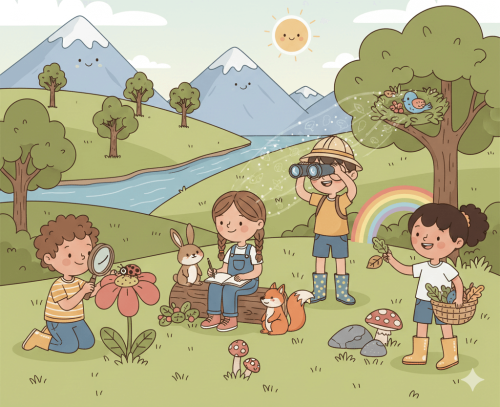
Naturalist intelligence is one of the most fascinating yet often overlooked forms of human ability. While many people are familiar with linguistic or logical-mathematical intelligence, naturalist intelligence highlights a different kind of brilliance — the ability to understand, recognize, and connect with the natural world.
If you’ve ever felt deeply attuned to animals, plants, weather patterns, landscapes, or environmental systems, you may possess strong naturalist intelligence. This guide explores what naturalist intelligence is, its defining characteristics, examples in everyday life, career paths, and how to develop it in children and adults.
What Is Naturalist Intelligence?
Naturalist intelligence is a concept introduced by psychologist Howard Gardner as part of his Theory of Multiple Intelligences. It refers to a person’s ability to identify, categorize, observe, and draw meaning from elements in nature — including flora, fauna, ecosystems, and natural phenomena.
- Notice subtle differences in plants, animals, and landscapes
- Recognize patterns in nature
- Feel emotionally connected to the outdoors
- Enjoy activities such as gardening, hiking, wildlife observation, or environmental research
- Think in terms of ecosystems and natural systems
In simple terms, naturalist intelligence is the ability to “read” the natural world.
Why Naturalist Intelligence Matters Today
In a world increasingly shaped by technology and urban living, naturalist intelligence is more important than ever. Environmental sustainability, climate awareness, conservation, and biodiversity protection all depend on individuals who can interpret and care for natural systems.
- Environmental responsibility
- Mental well-being
- Observational precision
- Systems thinking
- Long-term ecological awareness
Key Characteristics of Naturalist Intelligence
1. Strong Observational Skills
Individuals notice subtle differences in leaves, insects, weather patterns, soil types, or animal behaviors.
2. Classification Ability
The ability to categorize and organize information about living and non-living natural elements.
3. Sensitivity to Environment
Heightened awareness of environmental changes and seasonal patterns.
4. Emotional Connection to Nature
Feeling restored and calm when spending time outdoors.
5. Curiosity About Life Systems
Interest in ecosystems, food chains, and environmental interactions.
Naturalist Intelligence vs. Other Types of Intelligence
| Type of Intelligence | Core Ability | Example Behavior |
|---|---|---|
| Linguistic | Word use and language mastery | Writing essays, storytelling |
| Logical-Mathematical | Reasoning and problem-solving | Solving equations, coding |
| Spatial | Visual thinking | Designing buildings |
| Bodily-Kinesthetic | Physical coordination | Dance, athletics |
| Interpersonal | Understanding others | Leadership, negotiation |
| Intrapersonal | Self-awareness | Reflective journaling |
| Musical | Rhythm and sound sensitivity | Playing instruments |
| Naturalist | Recognizing patterns in nature | Identifying species, studying ecosystems |
Real-Life Examples of Naturalist Intelligence
Children May:
- Collect rocks, leaves, or insects
- Show fascination with animals
- Prefer outdoor play
- Ask questions about weather or plants
- Enjoy nature documentaries
Adults May:
- Maintain home gardens
- Volunteer in conservation programs
- Enjoy wildlife photography
- Choose environmental careers
- Advocate for sustainability
Careers That Align with Naturalist Intelligence
- Environmental Scientist
- Marine Biologist
- Wildlife Conservationist
- Botanist
- Geologist
- Ecologist
- Park Ranger
- Agricultural Scientist
- Landscape Architect
- Sustainability Consultant
How to Identify Naturalist Intelligence in Yourself
- Do you feel refreshed after spending time outdoors?
- Do you notice details in plants or animals others overlook?
- Are you concerned about environmental issues?
- Do you enjoy categorizing living things?
- Did you enjoy biology or earth science?
How to Develop Naturalist Intelligence
For Children
- Encourage outdoor exploration
- Provide hands-on gardening experiences
- Use nature journals
- Visit nature centers
- Introduce field guides
For Adults
- Practice mindful observation
- Take ecology courses
- Volunteer for conservation
- Start a home garden
- Join citizen science projects
Psychological Benefits
- Lower stress levels
- Improved focus
- Better emotional regulation
- Reduced anxiety
- Enhanced creativity
Naturalist Intelligence in Education
- Outdoor science experiments
- School gardens
- Environmental projects
- Field trips
- Climate simulations
Practical Activities to Strengthen Naturalist Skills
Beginner
- Keep a plant alive for three months
- Identify five bird species
- Track daily weather changes
Intermediate
- Create compost
- Study soil types
- Learn native vs. invasive species
Advanced
- Conduct biodiversity count
- Map local ecosystems
- Study ecological restoration
Frequently Asked Questions (FAQs)
What is naturalist intelligence in simple terms?
It is the ability to recognize patterns in nature and understand environmental systems.
Who discovered naturalist intelligence?
Howard Gardner introduced it in his Theory of Multiple Intelligences.
Can naturalist intelligence be measured?
There is no single standardized test, but behavior and preference assessments can indicate it.
Is naturalist intelligence related to IQ?
No. IQ tests mainly measure logical and linguistic abilities.
How can parents encourage naturalist intelligence?
By promoting outdoor experiences and hands-on environmental learning.
Is naturalist intelligence important in urban settings?
Yes. Urban sustainability and environmental planning rely on it.